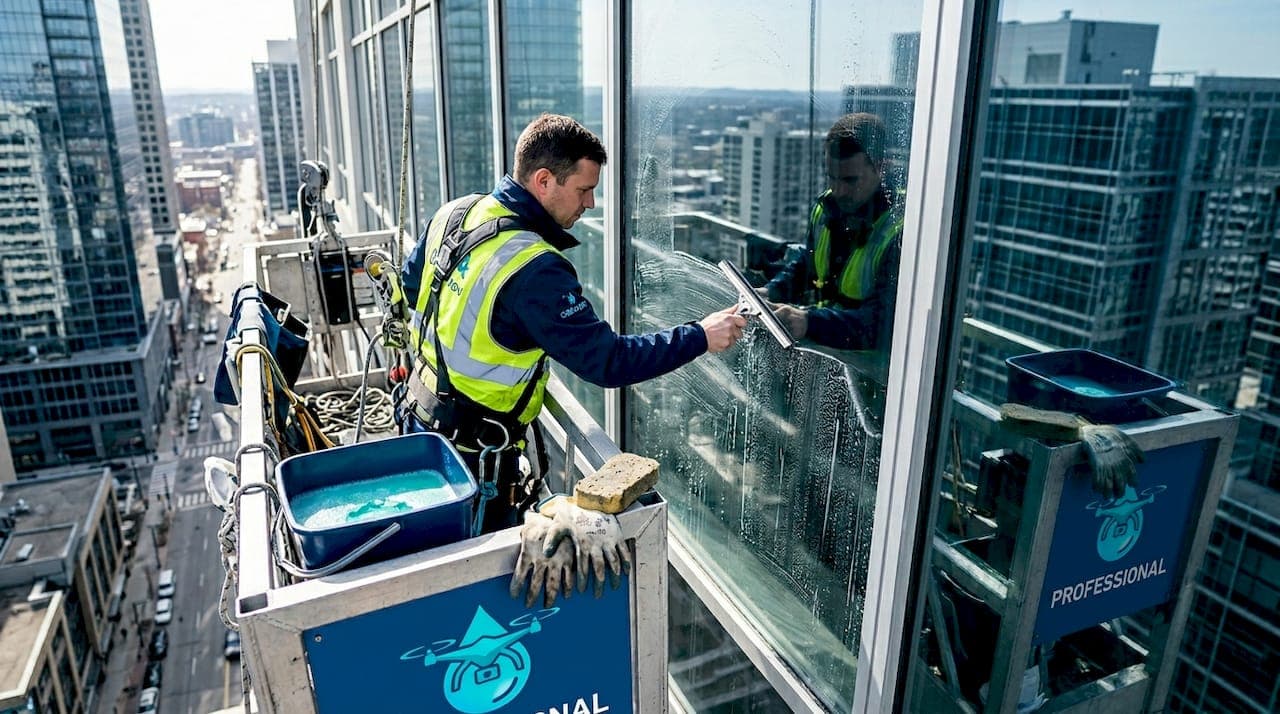
Neglecting the exterior windows of a commercial high-rise is never a neutral decision. Dirty glass signals poor management to tenants and visitors, accelerates surface degradation from South Florida's salt air and UV exposure, and can quietly trigger lease disputes or code complaints. The risks go beyond appearances: work at height carries serious safety and compliance obligations that, when ignored, expose property owners to significant liability. This guide walks you through every phase of high-rise exterior window cleaning, from initial hazard assessment to post-clean verification, so you can make smarter, safer, and more cost-effective decisions for your building.
Table of Contents
- Assessing risks and requirements for high-rise window cleaning
- Tools, methods, and new technology for exterior window cleaning
- Step-by-step: The best process for safe, thorough window cleaning
- Cost factors and how to get the best value
- Why most property managers miss real savings and safety opportunities
- Find your best-fit solution for high-rise window cleaning
- Frequently asked questions
Key Takeaways
| Point | Details |
|---|---|
| Prioritize safety and compliance | Always start with a documented risk assessment and ensure all equipment meets OSHA standards. |
| Evaluate efficient cleaning methods | Compare traditional vs. drone and hybrid solutions to maximize safety and reduce labor costs. |
| Understand cost factors | Building height, access, condition, and safety needs drive both hourly and per-square-foot pricing. |
| Choose providers with proven protocols | Work only with companies that provide written SOPs and daily equipment inspections for full compliance. |
Assessing risks and requirements for high-rise window cleaning
Before a single squeegee or drone touches your building's glass, you need a clear picture of what you're working with. This is not a step to rush. A thorough pre-work assessment protects your tenants, your contractors, and your liability exposure.
Jobsite hazard identification
Every building presents its own hazards. In South Florida, that means factoring in wind speeds off Biscayne Bay, the condition of existing anchor points, proximity to pedestrian traffic on busy streets, and the building's facade material. A proper high-rise window cleaning process begins with a documented site walk that maps access points, identifies structural risks, and flags any environmental conditions that could affect worker safety.
Key hazard categories to assess:
- Structural anchors: Are existing roof anchors rated for the load? When were they last certified?
- Wind exposure: South Florida buildings above 10 stories regularly experience gusts that exceed safe rope access thresholds.
- Ground-level hazards: Pedestrian zones, parking structures, and traffic lanes below the work area all require cordoning and signage.
- Facade condition: Cracked caulking, loose panels, or corroded frames create unexpected hazards for workers on ropes or scaffolds.
- Electrical proximity: Exterior lighting fixtures, HVAC units, and satellite equipment on facades must be identified before any cleaning begins.
Compliance and documentation requirements
SOPs for high-rise window cleaning must include pre-work hazard assessments, documented daily equipment inspections, and fall-protection planning that references OSHA standards and includes a written rescue and emergency response plan. In Florida, this is not optional. OSHA's General Industry and Construction standards both apply to suspended access work, and local jurisdictions like Miami-Dade may layer additional requirements on top.
"A written rescue plan isn't just a regulatory checkbox. It's the difference between a recoverable incident and a fatality."
Pro Tip: Before signing any contract, ask your cleaning vendor for their written emergency rescue procedure. If they can't produce one on the spot, that's a red flag worth acting on.
| Compliance item | Requirement | Who is responsible |
|---|---|---|
| Fall protection plan | Written, site-specific | Contractor |
| Equipment inspection log | Daily, signed | Crew supervisor |
| Rescue/emergency plan | Written, accessible on-site | Contractor + PM |
| OSHA 1926 Subpart R | Scaffolding standards | Contractor |
| Anchor certification | Periodic third-party | Building owner |
Comparing rope access vs. drone cleaning from a compliance standpoint is increasingly relevant, since drone-based methods eliminate most of these worker-at-height documentation requirements entirely.
Tools, methods, and new technology for exterior window cleaning
With an understanding of required preparations and risks, let's explore the equipment and cleaning methods best suited for high-rise commercial properties.
Traditional equipment
The conventional toolkit for commercial high-rise window cleaning includes:
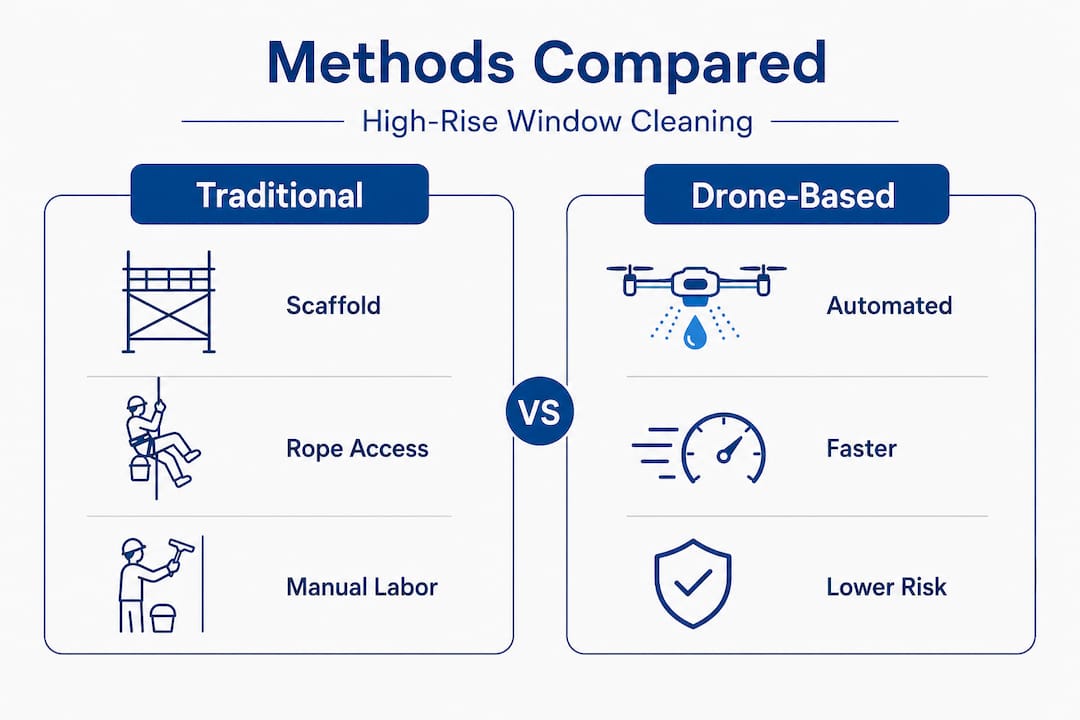
- Suspended scaffolding (swing stages): Reliable but slow to rig, expensive to rent, and disruptive to tenants and street traffic.
- Rope access systems: Faster to deploy than scaffolding, but require highly trained technicians and daily inspections of ropes, anchors, and all suspended access equipment with written rescue procedures in place for any failure scenario.
- Boom lifts and aerial work platforms: Practical for buildings under 80 feet, but impractical or impossible for true high-rises.
- Water-fed pole systems: Effective for lower floors using purified water, but physically limited to roughly 70 feet.
Drone-based cleaning technology
Industrial cleaning drones have changed the math on high-rise exterior maintenance. Equipped with soft-wash systems and de-ionized water, FAA-certified drones can reach facades over 200 feet without putting a single worker on a rope. The differences between rope access and drone cleaning go well beyond safety. Drones can complete large facade sections in hours rather than days, generate before-and-after photo documentation automatically, and operate without closing sidewalks or disrupting ground-level traffic.
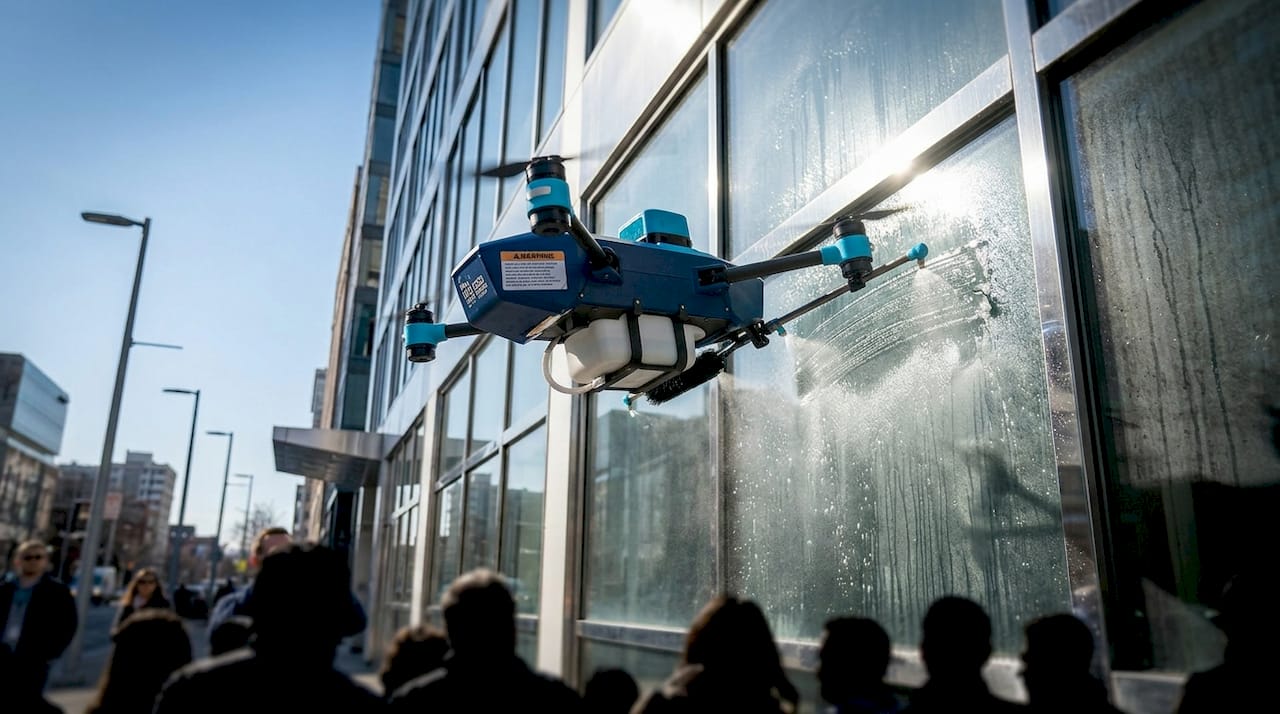
Pro Tip: Ask your drone cleaning provider for their FAA Part 107 certification and proof of liability insurance before any flight operations near your building. Reputable operators will have both ready.
Method comparison
| Method | Max height | Safety risk | Typical speed | Relative cost |
|---|---|---|---|---|
| Swing stage scaffold | Unlimited | High | Slow | High |
| Rope access | Unlimited | Moderate-High | Moderate | Moderate-High |
| Boom lift | ~80 ft | Moderate | Moderate | Moderate |
| Water-fed pole | ~70 ft | Low | Fast (low floors) | Low |
| Industrial drone | 200+ ft | Very Low | Fast | Low-Moderate |
For large commercial buildings in Miami, the cheapest way to clean commercial windows at scale increasingly points toward drone-assisted or hybrid approaches that combine drone exterior washing with targeted manual work on interior-facing glass or heavily soiled spots.
Step-by-step: The best process for safe, thorough window cleaning
Once you have the right tools and method, follow this proven sequence for high-rise window cleaning. This order is not arbitrary. Each step builds on the last, and skipping any one of them creates gaps that show up either in the quality of the clean or in your compliance documentation.
-
Conduct a site-specific risk assessment. Walk the building perimeter, review structural anchor certifications, and document all hazards before mobilizing any equipment or crew.
-
Assign a qualified supervisor. Every high-rise cleaning project needs a designated site supervisor with documented training in fall protection and suspended access. This person is responsible for all pre-work checks and daily sign-offs.
-
Prepare and inspect all equipment. Ropes, harnesses, anchors, scaffolding components, and cleaning systems must all be inspected and logged before use. Written rescue and emergency procedures must be accessible on-site for any suspended access work.
-
Secure the ground zone. Tape off pedestrian areas below the work zone, post signage, coordinate with building management on tenant notifications, and set up debris nets if required by local code.
-
Set up access systems. Whether you're rigging swing stages, deploying rope access, or launching drones, this step requires the most setup time. Verify all anchor connections under load before committing the full crew or equipment.
-
Clean in defined zones. Work from the top down, floor by floor, in pre-mapped zones. This prevents dirty runoff from contaminating already-cleaned glass below. Track zone completion on a job log.
-
Quality check each zone before moving on. A supervisor or designated QA person should inspect each completed section in natural light before the crew moves to the next zone. Streaks, mineral deposits, and missed spots are far easier to address immediately than after full demobilization.
-
Conduct post-clean review and document results. Final walkthrough, before-and-after photos, and a completed compliance checklist should all be submitted to the property manager within 24 hours of job completion.
| Phase | Key action | Documentation needed |
|---|---|---|
| Pre-work | Hazard assessment, equipment inspection | Signed inspection log |
| Setup | Anchor verification, ground zone secured | Site prep checklist |
| Cleaning | Zone-by-zone progress tracking | Job log with zone sign-offs |
| QA/QC | Supervisor inspection per zone | Photo documentation |
| Post-clean | Final walkthrough, compliance review | Completion report |
Understanding what you should pay for each phase of this process helps you evaluate bids accurately and spot contractors who are cutting corners on the steps that matter most.
Cost factors and how to get the best value
Understanding the cleaning process, you'll want to know how to budget appropriately and identify savings without compromising on safety or quality.
How commercial window cleaning is priced
Commercial exterior window cleaning in South Florida typically follows two pricing models:
- Hourly rates: Generally range from $50 to $100 per worker per hour, depending on access method and crew size.
- Per-square-foot rates: Typically $0.10 to $0.35 per square foot of glass, with higher rates for difficult access, heavy soiling, or significant height.
Pricing for commercial exterior work is driven by building height and access difficulty, total glass area or window count, surface condition including hard water mineral deposits or oxidation, and the equipment and safety gear required. For a 30-story building in Brickell with a curtain wall facade, that combination can push costs significantly higher than the base rate.
What drives costs up
- Height above 10 stories: Rope access and scaffold rigging costs increase substantially above this threshold.
- Hard water staining or oxidation: These require additional chemical treatment and labor time.
- Irregular facade geometry: Curved glass, inset windows, and decorative elements all slow down production rates.
- Safety gear requirements: Buildings with uncertified anchors may require temporary anchor installation, adding cost.
- Traffic management: Busy streets may require off-hours work or traffic control officers, both of which add to the invoice.
Pro Tip: Schedule exterior window cleaning as part of a broader facade maintenance package. Bundling window cleaning with pressure washing, caulking inspection, or solar panel cleaning often reduces per-service mobilization costs by 15 to 25 percent.
How drone cleaning changes the cost equation
Drone-based exterior washing eliminates most of the labor-intensive rigging and safety compliance overhead that inflates traditional bids. With no workers at height, you also reduce your insurance exposure and the risk of incident-related project delays. For large commercial properties, this can translate to 30 to 60 percent savings compared to conventional scaffold or rope access methods. The Miami window cleaning cost guide breaks down these comparisons by building type and height, which is useful when evaluating competing bids.
The cheapest way to clean commercial windows at scale is rarely the lowest-bid traditional contractor. It's the provider who combines efficient technology with a streamlined process that minimizes mobilization time, crew size, and compliance overhead.
Why most property managers miss real savings and safety opportunities
Here's the uncomfortable reality: most commercial property managers in South Florida are still signing the same kinds of window cleaning contracts they signed a decade ago. The vendor is familiar, the process is familiar, and familiarity feels like safety. But it isn't.
Legacy contractors default to scaffolding and rope access not because those methods are the best fit for your building, but because that's what their equipment inventory supports. They've already paid for the swing stages. They've already trained their crews on rope systems. Switching to drone-based cleaning would require them to invest in new technology, new certifications, and new insurance coverage. So they don't. And they pass the cost of that inertia on to you.
The "lowest bid" trap is equally problematic. When you pressure vendors purely on price, the first things to get trimmed are the safety protocols that don't show up on the invoice: the daily equipment inspection logs, the written rescue plans, the qualified supervisor on-site. These aren't visible line items, but their absence is what creates liability exposure when something goes wrong.
The managers who get the best outcomes from drone facade washing are the ones who evaluate vendors on documentation quality, technology capability, and compliance rigor, not just the bottom-line number. They ask for rescue plans. They request before-and-after photo reports. They compare total project cost including mobilization, compliance overhead, and risk exposure, rather than just the per-window rate.
One policy worth adopting immediately: require every exterior cleaning contractor to submit their daily safety inspection logs as part of the job completion package. This single requirement filters out a large percentage of under-qualified vendors before the first conversation gets very far.
Find your best-fit solution for high-rise window cleaning
Translating best practices into a real maintenance plan takes more than a checklist. It takes the right partner.
Whether your building is a 40-story tower in Brickell or a sprawling mixed-use complex along the coast, the right approach combines technology, compliance expertise, and local knowledge. At Exterior Drone Washing, we bring FAA-certified drone systems, full before-and-after documentation, and a process built around zero worker-at-height risk to every project. Our commercial building cleaning services are designed specifically for South Florida's high-rise environment, where salt air, UV damage, and dense urban settings demand more than a traditional crew with ropes. Connect with our drone window cleaning experts to get a tailored quote and compliance review for your property.
Frequently asked questions
What safety standards govern high-rise window cleaning in South Florida?
High-rise window cleaning must comply with OSHA standards, with documented fall protection and written rescue procedures required on every job site. Local Miami-Dade regulations may add further requirements depending on building height and access method.
How is commercial window cleaning priced for large buildings?
Pricing is driven by building height, total glass area, access difficulty, surface condition, and required safety equipment, using hourly or per-square-foot rates. Drone-based methods typically reduce total project cost by 30 to 60 percent compared to traditional approaches.
Do drones fully replace manual window cleaning for high-rises?
Drones handle the majority of exterior facade cleaning faster and more safely than rope or scaffold crews, but heavily oxidized glass or interior-facing windows may still require targeted manual work to achieve full results.
What documentation should I request from a high-rise window cleaning contractor?
Request SOPs that include pre-work hazard assessments, signed daily equipment inspection logs, and a written on-site rescue plan before authorizing any suspended access work on your building.